Dr. Lapate will be presenting new data demonstrating that the frontopolar cortex integrates temporally accumulated emotional information to support context-sensitive action selection in mid-LPFC, revealing a rostro–caudal functional gradient in LPFC for time-emotion integration. This work was led by Mengsi Li and will be presented at Control Processes in Ghent, Belgium (June 8–10). Stay tuned!
Aligning Science Across Parkinson’s (ASAP) study published in PNAS
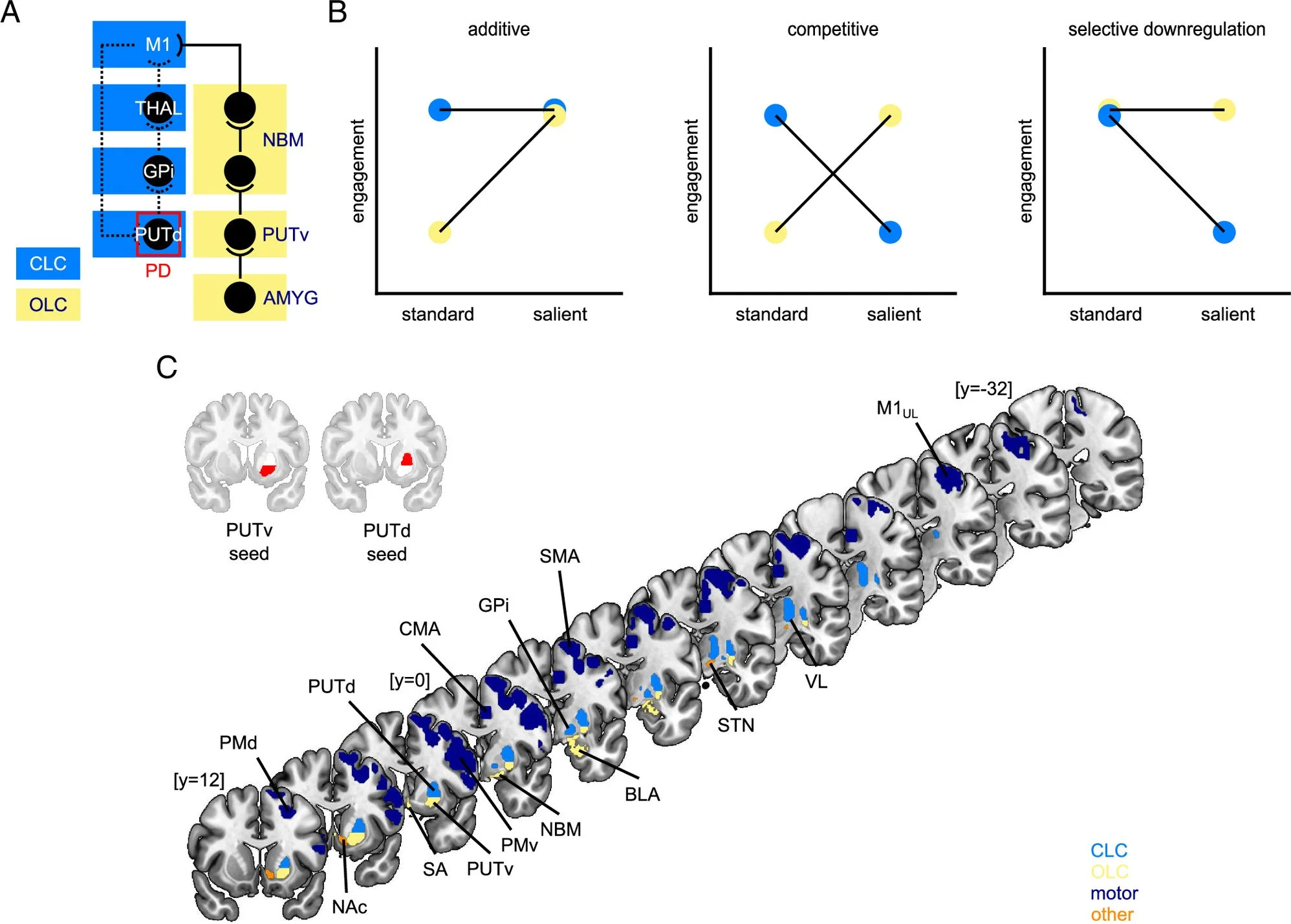
Work from a collaborative study between the LEAP Neuro Lab and Action Lab West (PI: Dr. Scott Grafton), titled “Incentive valence differentially engages open-and closed-loop basal ganglia circuits during movement initiation”, was just published in PNAS! Authored by Dr. Neil Dundon, this study combined 7T resting-state fMRI with 3T task-based fMRI to detail how motivationally relevant contexts influence movement initiation through distinct basal ganglia circuits, providing a new systems-level account of how affective salience and valence shape voluntary action. Specifically, the work identifies a ventral putamen-centered "open-loop circuit" that links affective and motor regions, operating alongside the canonical dorsal putamen-centered closed-loop sensorimotor circuit. This work helps explain how affective contexts can modulate voluntary movement and offers a candidate mechanism for phenomena such as paradoxical kinesia in Parkinson’s disease, where motivationally salient contexts may bypass degraded sensorimotor circuits. Congratulations Neil and team!
Joanne recognized as Open Science Champion by ASAP Collaborative Research Network
Joanne Stasiak was recognized by the Aligning Science Across Parkinson’s initiative’s Collaborative Research Network as an Open Science Champion for the month of April. The organization celebrated her open science practices in publishing her recent paper in the Journal of Cognitive Neuroscience, including sharing all fMRI data on OpenNeuro, adhering to data formatting standards, and publishing all task and analysis scripts on Github and Zenodo. Congratulations Joanne!
Joanne’s threat anticipation study published in JoCN
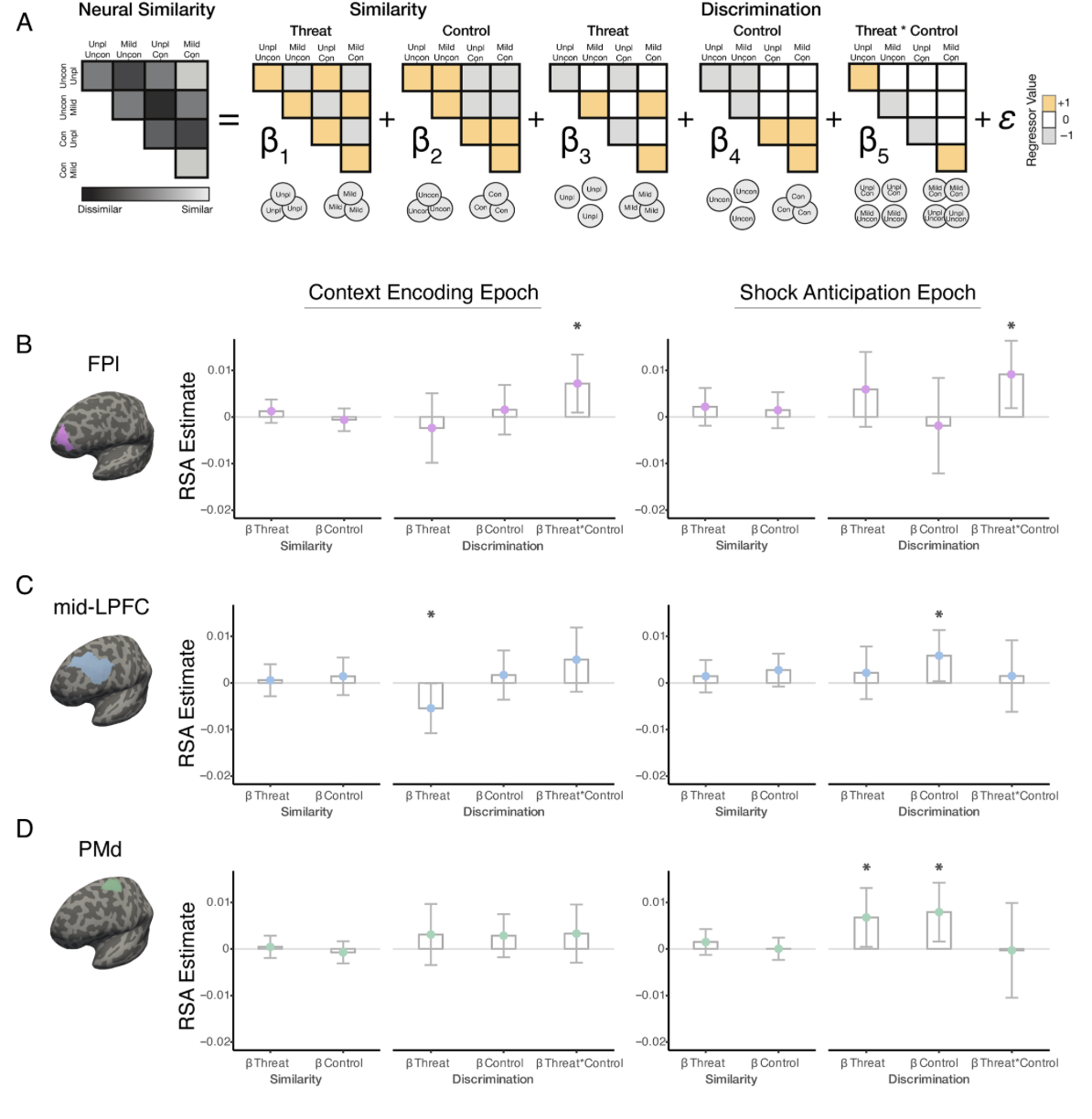
Joanne Stasiak’s paper, “Integrated representations of threat and controllability in lateral frontal pole”, was recently published in the Journal of Cognitive Neuroscience! Here, Joanne used finite impulse response modeling and pattern similarity analysis to examine dynamic engagement and representational properties of distinct LPFC regions during a naturalistic threat-of-shock paradigm. While caudal and mid-LPFC maintained independent representations of the unpleasantness and controllability of an upcoming electric shock, these orthogonal features were integrated within FPl to form conjunctive representations of threat and action-control information – which were in turn associated with successful motor performance. Together, this work furthers our understanding of the functional organization of the LPFC and highlights a key role for FPl in flexibly representing goal-relevant emotional information for anticipated future challenges. Congratulations Joanne!
Lapate gives talk at SANS
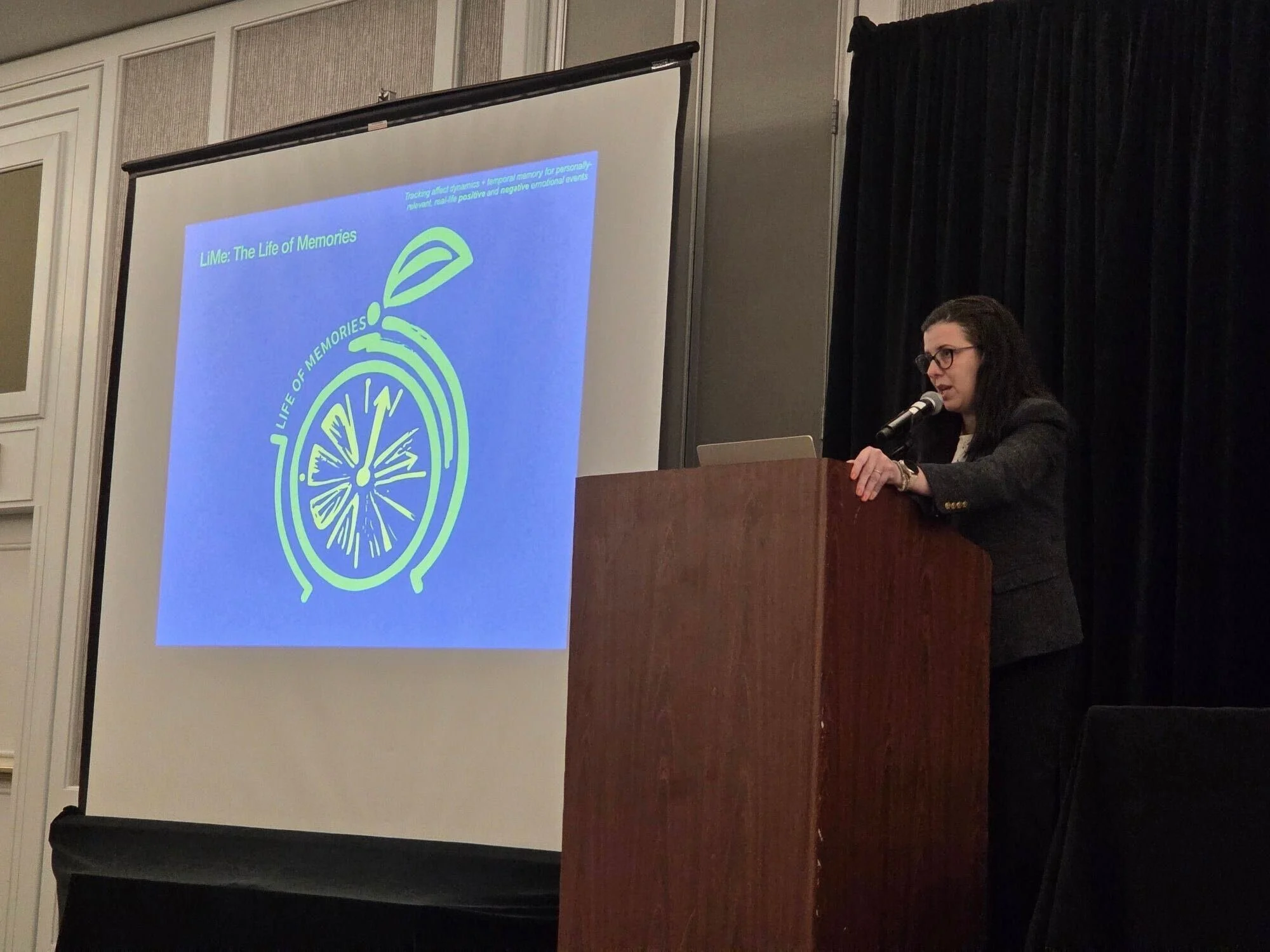
Dr. Lapate presented a faculty blitz talk titled “Emotion sculpts time in memory: Evidence from a dense-sampling study of real-life emotional events” at the annual meeting of the Social and Affective Neuroscience Society held in San Diego, CA.
LEAP Neuro lab presents at SANS
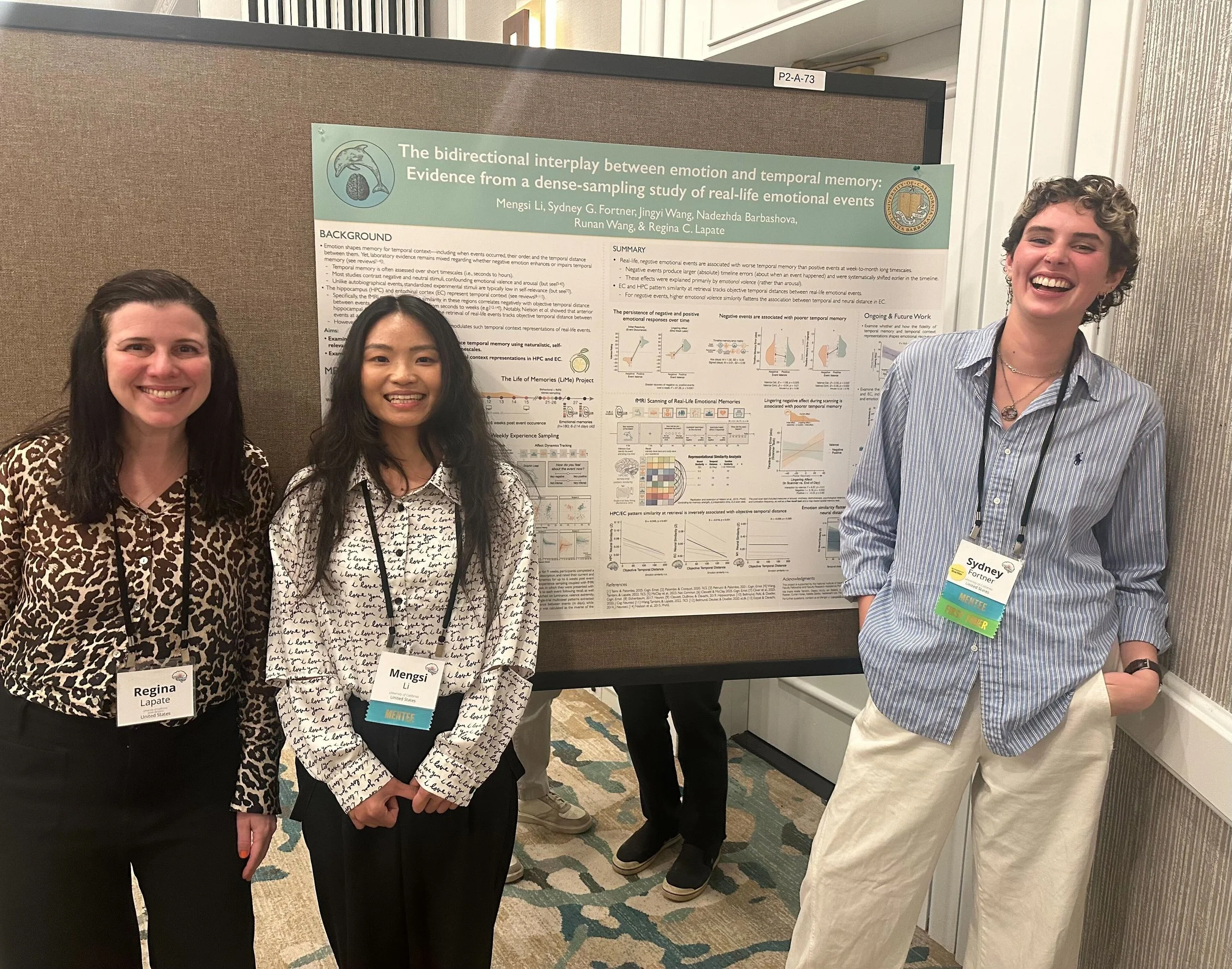
At the annual Social and Affective Neuroscience Society meeting in San Diego, CA, Mengsi Li and Sydney Fortner presented a poster titled “The bidirectional interplay between emotion and temporal memory: Evidence from a dense-sampling study of real-life emotional events.”
Recent preprints from the LEAP Neuro lab
The LEAP Neuro Lab has been busy wrapping up some of our recent work, with three manuscripts being released as preprints and submitted for review!
Joanne Stasiak’s work, titled “Neural control of autonomic arousal during threat anticipation revealed by high-resolution cardiac contractility”, used trans-radial electrical bioimpedance velocimetry (TREV) – a novel, non-invasive measure of cardiac contractility – to examine neural-cardiac coupling during the anticipation of threat using a threat-of-shock paradigm in the MRI scanner. Joanne found that threat-related increases in TREV-indexed contractility were associated with threat-modulated activation in posterior parietal cortex, dorsomedial prefrontal cortex, and cerebellum, which were in turn linked to adaptive motor responses during controllable threat. Of note, these modulatory effects were specific to threat-dependent changes in TREV-indexed cardiac contractility and were not observed when examining changes in skin conductance. Moreover, Joanne found that trial-wise changes in TREV more closely tracked changes in subjective arousal (compared to changes in skin conductance) – further validating and establishing this new MRI-compatible method as an excellent tool to non-invasively track continuous changes in sympathetic arousal.
Dr. Jingyi Wang’s paper, “Distinct amygdalar pathways to frontopolar cortex and medial temporal lobe support temporal memory for emotional events”, sought to elucidate the role of lateral frontal pole (FPl) and medial temporal lobe (MTL) regions in temporal memory for emotional events using trial unique positive and negative images encoded in the MRI scanner, followed by a surprise temporal memory task. Jingyi replicated previous findings suggesting that higher pattern similarity in FPl and hippocampus are associated with poorer temporal memory for 'when' an emotional image was presented during the experiment. Negative emotional valence was associated with stronger amygdala activation. Critically, Jingyi found that higher trial-wise amygdala activation predicted higher between-trial pattern similarity in hippocampus, but lower within-trial pattern similarity in FPl. Collectively, these findings provide evidence for distinct amygdala-PFC and amygdala-MTL relationships subserving temporal memory for emotional events.
Recent work by Mengsi Li has also been released as a preprint, titled “The temporal organization of memory and emotion is reciprocally coupled”. Here, Mengsi combined EEG and behavioral measures to investigate how affective spillover (i.e., the persistence of affect over time) is regulated by the temporal organization of memory. We found that alpha burst time modulated affective spillover and was predictive of dilated remembered temporal distances. In addition, longer remembered temporal distance between emotional images in sequences predicted reduced affective spillover, while higher within-event temporal order memory was associated with greater affective spillover. Changes in emotional valence across sequences were associated with longer temporal distance estimates, and higher temporal order memory. These results suggest a reciprocal relationship between the temporal dynamics of emotion and the temporal structure of memory, unveiling how memory structure shapes – and is shaped by – emotion. Stay tuned for more!
Lapate and Wang delivered talks at two CNS symposia
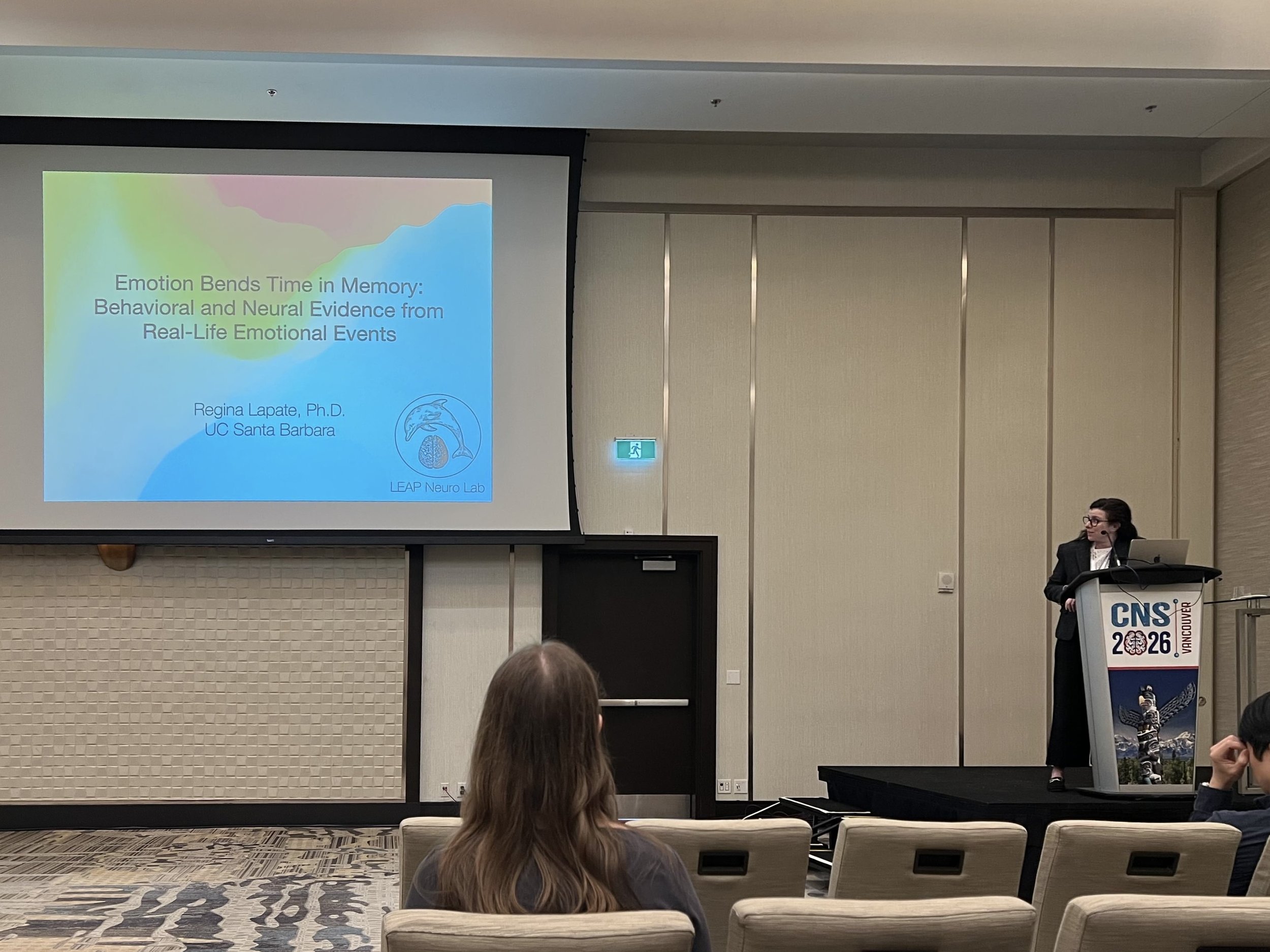
Dr. Lapate gave an invited talk titled “How Emotion Bends Time in Memory: Behavioral and Neural Evidence from Real-Life Emotional Events” in the symposium “Emotion and the organization of temporal context in memory” alongside speakers Daniela Palombo, Andy Lee, and chairman Joseph Dunsmoor at the Cognitive Neuroscience Society annual meeting in Vancouver, Canada.
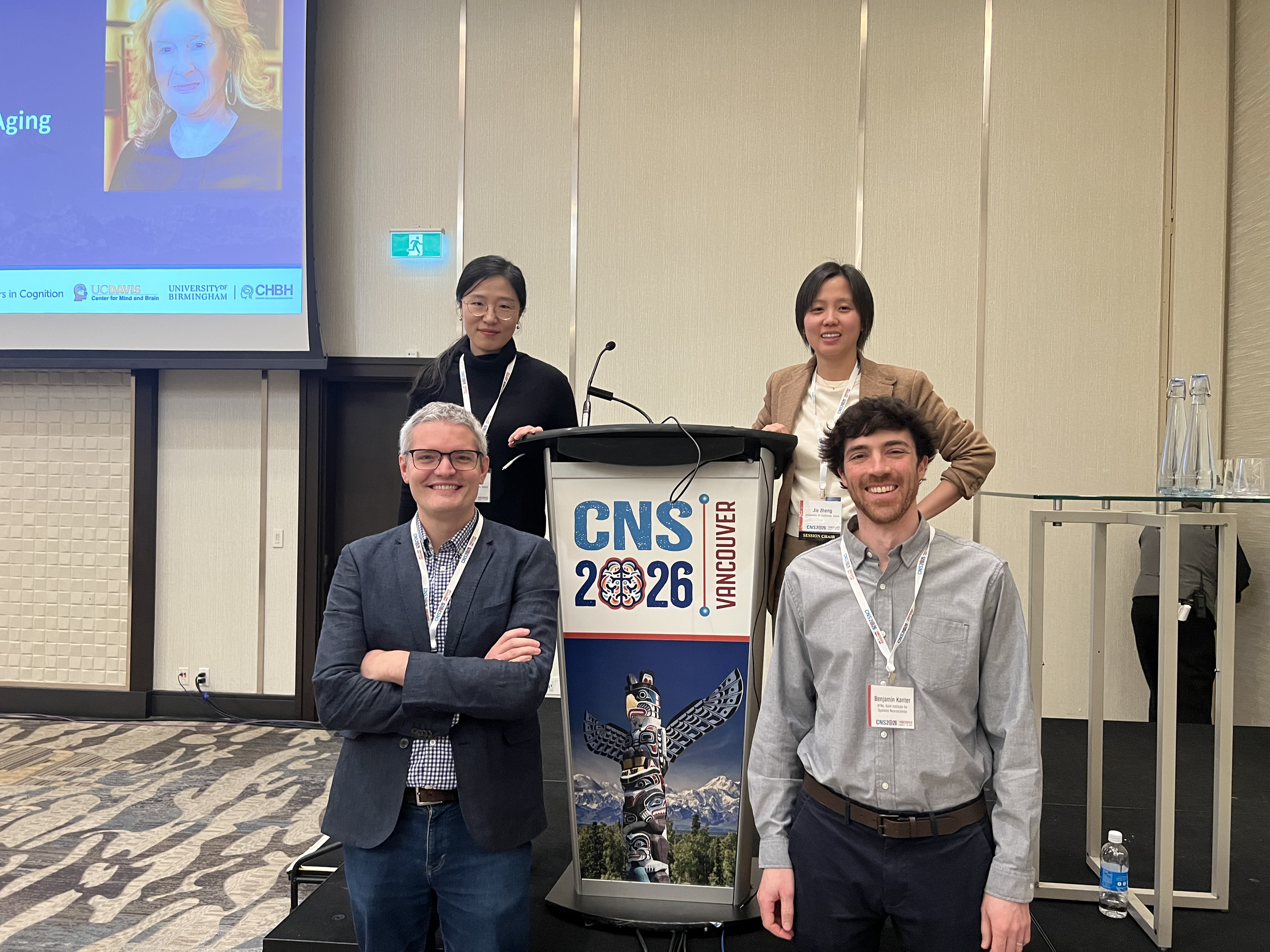
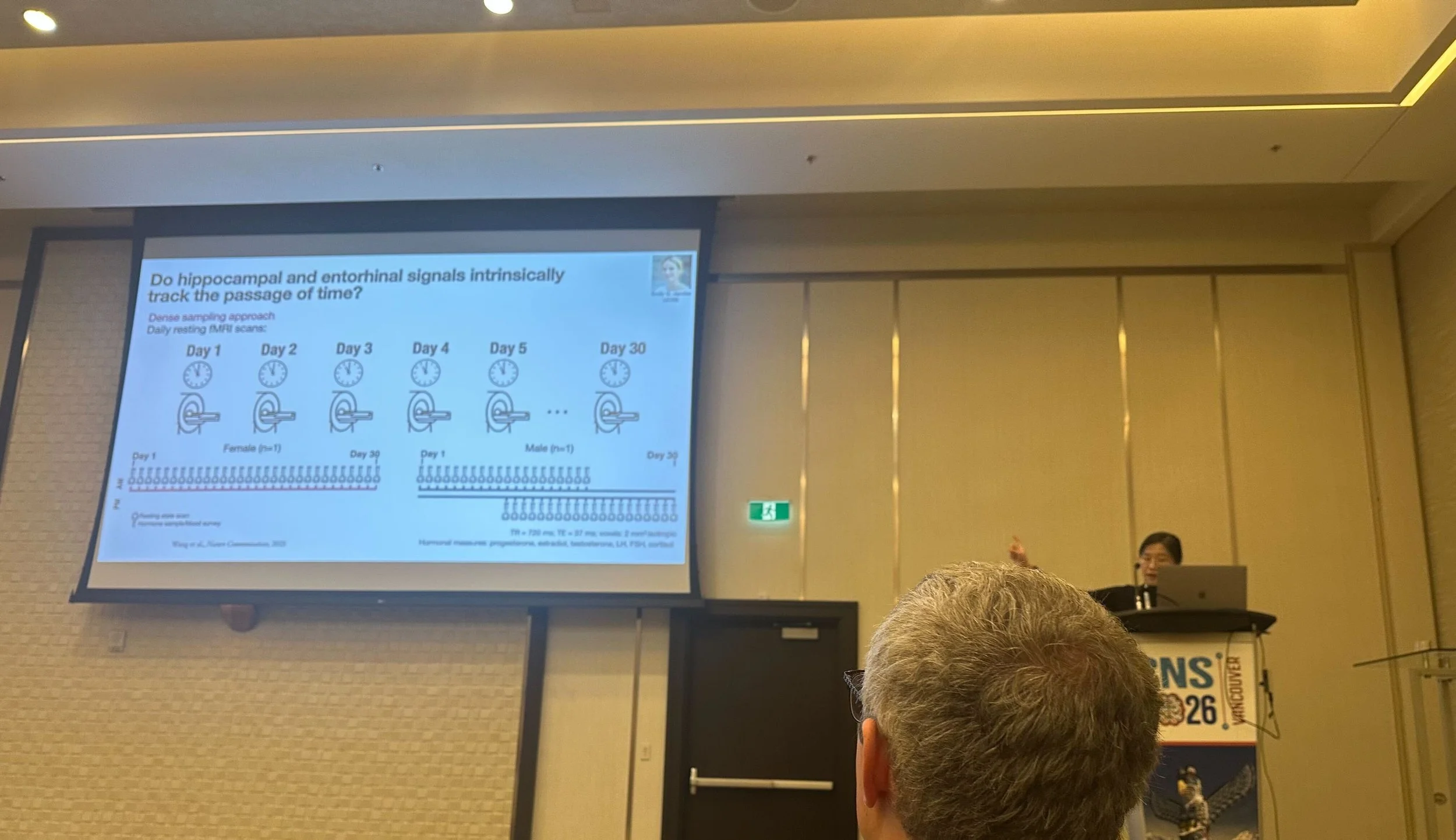
Dr. Jingyi Wang’s presentation, “The intrinsic time tracker: Temporal context is embedded in entorhinal and hippocampal functional connectivity patterns,” was delivered as part of the “Neural Time Machine: Temporal Organization of Experience in the Brain” symposium alongside speakers James Antony, Benjamin Kanter, and chairman Jie Zheng.
LEAP Neuro Lab to present in two upcoming symposia at CNS
We are thrilled to announce that two symposia featuring some our lab’s latest research have been selected for presentation at the upcoming annual meeting of the Cognitive Neuroscience Society (CNS) to be held in March 7-10 in Vancouver, BC.
Dr. Lapate will be present a talk titled: “How Emotion Bends Time in Memory: Behavioral and Neural Evidence from Real-Life Emotional Events” as part of a symposium titled Emotion and the organization of temporal context in memory chaired by Dr. Joey Dunsmoor.
Dr. Jingyi Wang will be present: “The intrinsic time tracker: Temporal context is embedded in entorhinal and hippocampal functional connectivity patterns” as part of the Neural Time Machine: Temporal Organization of Experience in the Brain symposium chaired by Dr. Jie Zheng.
We hope to see you there!